
Evidence into Practice
Evidence into Practice is a national programme from Foundations that helps local authorities across England strengthen evidence-informed decision-making. The programme supports local leaders to put robust evidence at the heart of service design and delivery – turning research into effective practice that improves outcomes for children and families.
Why Evidence into Practice is needed
Children’s services are undergoing major reform across Family Hubs, Family Help and Children’s Social Care. These changes are an opportunity to strengthen services and shift towards earlier, more effective intervention, grounded in the best available evidence.
Although we know that evidence-based approaches lead to better outcomes, they are not always the ones being used. Some widely adopted interventions have limited evaluation, while others with strong evidence are not widely available to families. This gap matters. Referrals to children’s social care continue to rise, driven by parental mental health needs, domestic abuse and other pressures. Decisions about how to support families must therefore be grounded in high-quality evidence that shows what genuinely improves outcomes.
But knowing what works is not enough. Local leaders also need support to:
- adapt interventions for local communities
- prepare and train the workforce
- build the systems and conditions needed for long-term sustainability
Evidence into Practice helps local areas do exactly that. It brings together What Works evidence, local insight and lived experience to create services that are effective, equitable and built to last.
Building on Strong Foundations
Evidence into Practice builds directly on Foundations’ long-standing experience supporting local authorities to implement evidence. It follows the success of our Changemakers Programme, which helped local leaders bridge the gap between evidence and practice. Changemakers highlighted the importance of leadership, culture and system readiness – insights that now shape the design and delivery of Evidence into Practice.
Supporting the Delivery of Reform in children’s services
Evidence into Practice aligns with major reforms set out in the Children’s Social Care National Framework and Keeping Children Safe, Helping Families Thrive – both of which position evidence as a core driver of effective services.
The programme focuses on service areas where strong What Works evidence can make the biggest difference, including:
- parenting support
- kinship care
- mentoring and befriending for care-experienced children and young people
By supporting leaders to adopt and adapt evidence-based approaches, Evidence into Practice helps build the confidence and capability needed for successful reform.
Improving Outcomes for Children and Families
Evidence into Practice aims to create a system where every child and family receives support grounded in robust evidence of what works.
By connecting rigorous research with local expertise, the programme supports:
- more consistent and confident decision-making
- more effective and equitable services
- better outcomes for children and families
As reforms progress, the demand for high-quality, evidence-based approaches will only grow. The programme will help local authorities meet this challenge – showing that strong evidence and responsive local delivery work best when they work together.
Three Tiers of Activity
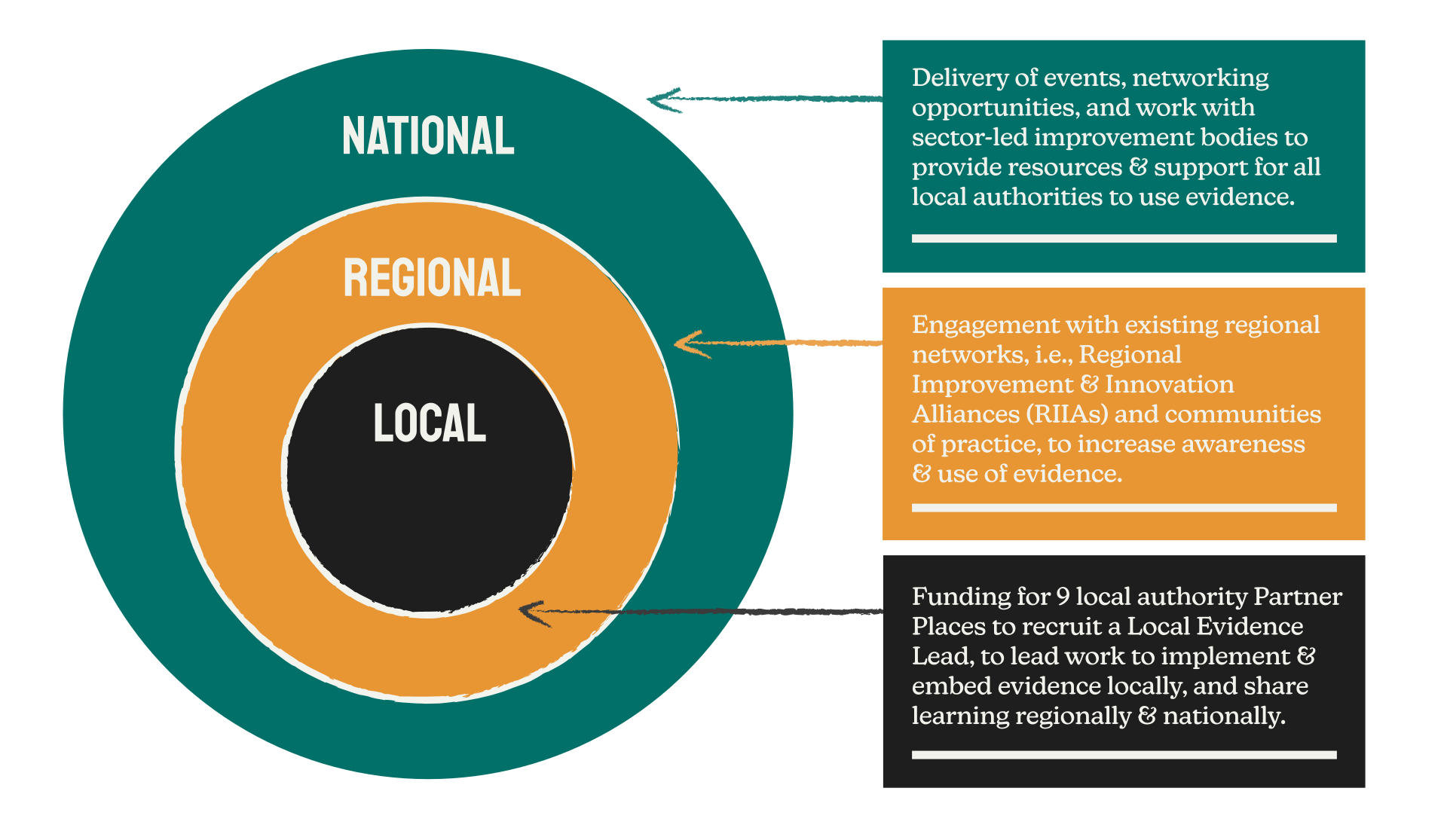
Evidence into Practice is designed to help local authorities strengthen evidence use at every level of the system. The programme operates across three tiers – national, regional and local – ensuring that all areas can access support while also investing more deeply in places ready to lead the way.
Partner Places
Partner Places are central to our mission to strengthen evidence use in children’s social care. Between October 2025 and March 2027, we are working with nine areas – one in every region of England – to support them to embed evidence in local decision-making and practice.
The nine Partner Places reflect a diverse mix of local authorities – varying in geography, size and Ofsted ratings – ensuring that learning is relevant across a wide range of local contexts.
Each Partner Place receives £100,000 to appoint a Local Evidence Lead, who drives evidence-informed approaches across children’s services. A Foundations Senior Practice Development Adviser works closely with each area to identify priorities, understand population needs and select the most effective, evidence-based approaches.
Partner Places use key resources from the Foundations Toolkit, including the Practice Guides and Foundations’ Guidebook, as well as our Implementation Framework, which helps local areas plan, deliver and sustain evidence-based change.
Partner Places also share insights with neighbouring authorities through Regional Improvement and Innovation Alliances, and nationally through Foundations’ learning networks. Supported by Foundations, the Department for Education, the Local Government Association and Principal Social Worker regional leads, this collaboration strengthens regional and national capacity for evidence use, ensuring the benefits extend far beyond the nine participating areas.
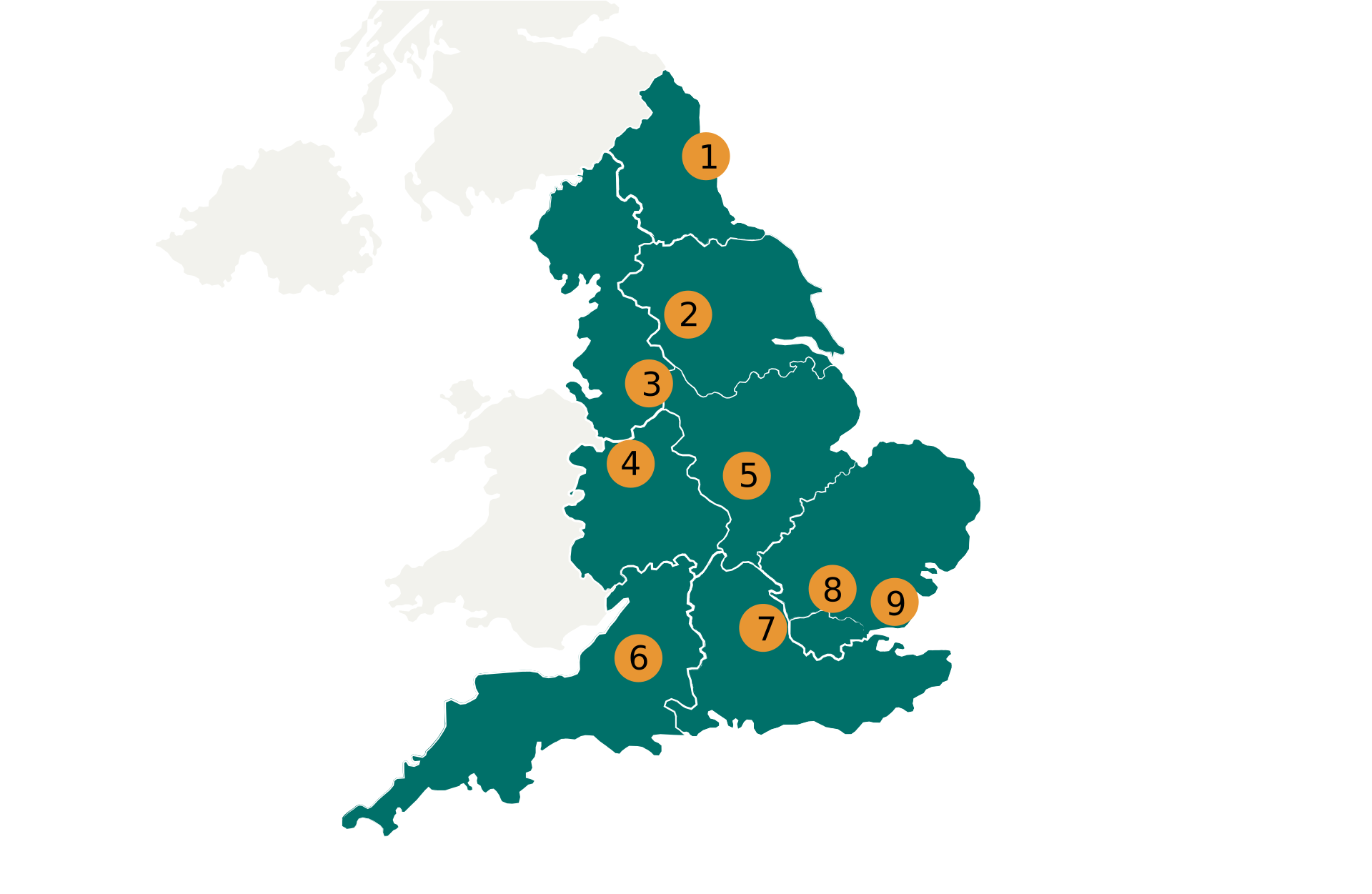
Northumberland County Council
North East
Bradford Family & Children's Trust
Yorkshire & the Humber
Stockport Council
North West
Telford & Wrekin Council
West Midlands
Leicester City Council
East Midlands
Wiltshire Council
South West
Wokingham Borough Council
South East
London Borough of Enfield
Greater London
Southend-on-Sea Council
East of England
Foundations' Evidence Pie
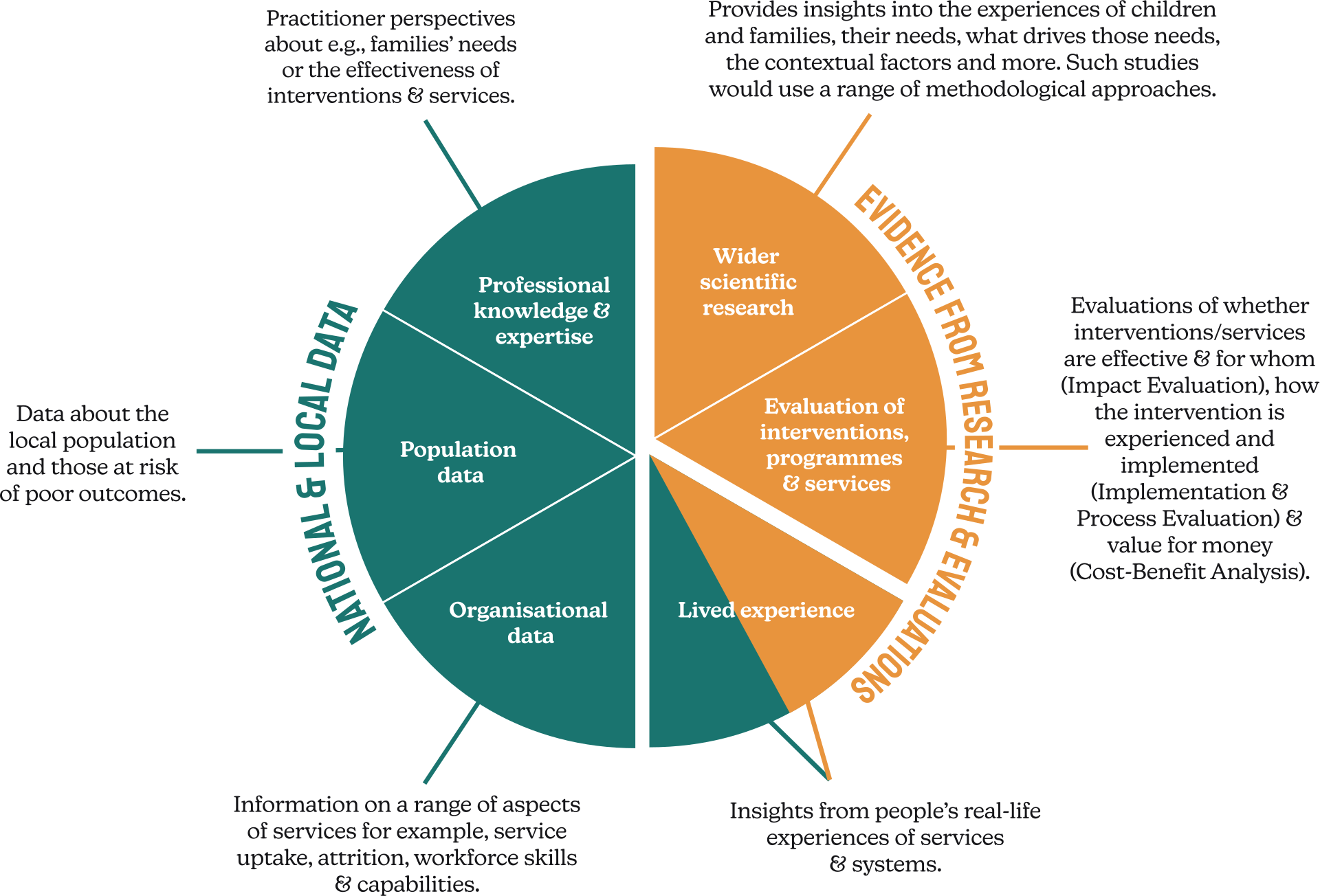
To support local authorities to strengthen their use of evidence, Foundations uses the Evidence Pie – a diagram that shows the full range of evidence that should inform the commissioning, design and delivery of services. It reminds local leaders, commissioners and practitioners of the different types of evidence that are important to make the best decisions about services for children and families.
Central to the Evidence Pie is What Works evidence – high-quality research and evaluation that shows what has been proven to improve outcomes for children and parents. Impact evaluations play a crucial role in identifying which interventions work, for whom, and in what contexts. This evidence, made accessible through Foundations’ Guidebook and the Practice Guides, is essential for strengthening services.
However, What Works evidence is only one part of the picture. Effective local decision-making also depends on drawing on a broader set of evidence, including:
- Population and organisational data, which help identify local needs, service performance and workforce capacity.
- Professional knowledge and expertise, offering practitioner insight into what works in context.
- Lived experience, bringing the perspectives of children, young people, parents and carers on what support feels effective and meaningful.
- Wider scientific research, which deepens understanding of the drivers of need and the contexts in which families live.
Although local areas routinely use many of these types of evidence, there is still a gap between what we know improves outcomes and what happens in practice. Foundations’ Evidence Pie helps bridge this gap by creating a shared understanding of what counts as evidence – and how it can be used to drive better outcomes for children and families.
Supporting local authorities to draw on the Evidence Pie in their decision-making will be a key part of our Evidence into Practice work.
Read more: Putting the evidence & data into action
| Professional knowledge and expertise | Seeking and valuing a full range of practitioner perspectives from across the wider system about e.g. the families’ population needs or/and the effectiveness of interventions and services. |
| Population data | Regularly seeking and reflecting on data about the local population and paying attention to those at risk of poor outcomes. Focus where there is most need and seek to understand how localities may be changing over time. |
| Organisation data | Collect and analyse data, including population needs assessments, to make decisions about what to commission and deliver. Monitor local implementation data around uptake and its impact on children and families. Regularly review data on workforce skills and capabilities to plan professional development and service delivery. |
| Lived experience | Actively seeking, valuing and responding to the voice of children and young people, adults and family when making decisions about services, polices and priorities. Lived experience is an important source of insight across many types of evaluation and should be considered alongside national research (e.g. Foundations’ evidence synthesis) and local data. |
| Wider scientific research | Explore and apply the findings from research which provides insights into the experiences of children and families, their needs, what drives those needs, the contextual factors and more. Such studies would use a range of methodological approaches. |
| Evaluation of interventions, programmes and services. | Explore evaluations to examine whether interventions /services are effective and for whom (Impact Evaluation), how the intervention is experienced and implemented (Implementation and Process Evaluation), and value for money (Cost-Benefit analysis). Bringing together multiple evaluations (synthesis and systematic reviews) will provide stronger evidence than relying on a single evaluation study. |